
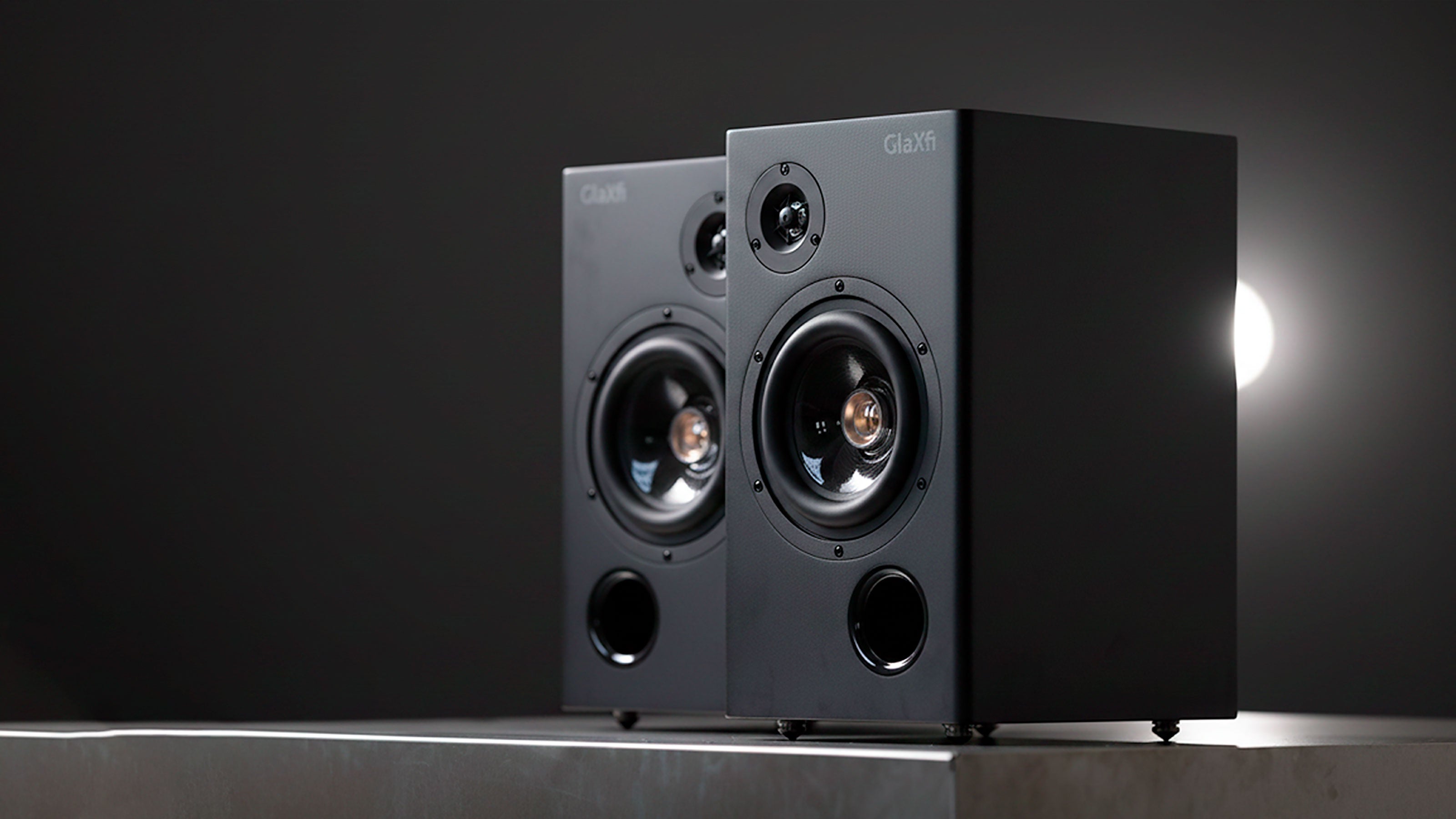
Audio got comfortable. Most speakers ask: how good can we make this for the price?
We ask a different question: how good can we make this, period?
We didn't start GlaXfi to make another speaker. We started it to ask a question: what happens when you refuse to compromise? When you build with glass instead of paper.
When you measure against tolerances most manufacturers skip.
When you treat every product like it's going to be held up to the light - because ours literally are.
This isn't audio for people who chase trends. It's for people who still feel something when the right song comes on. People who care about craft without needing to explain why.
We make speakers for the way music deserves to be heard.
Nothing added. Nothing lost.
Soul of Glass™ isn’t a marketing phrase.
It’s a material science.

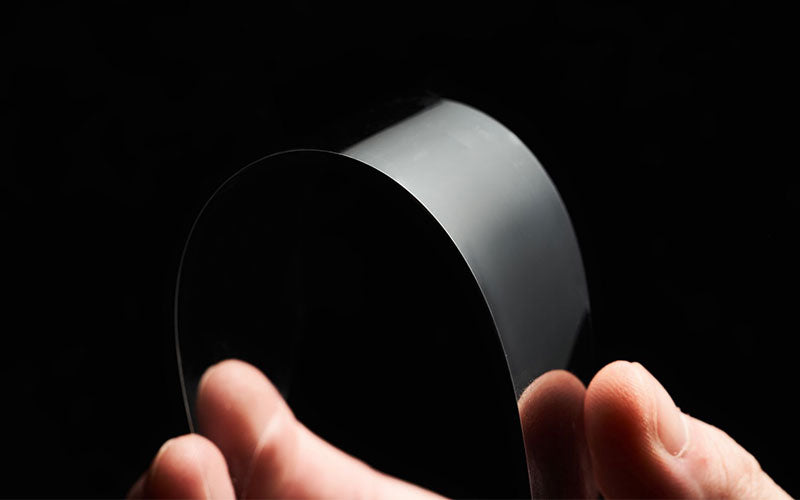
Why glass?
Most diaphragms compromise. Paper is warm but soft. Metal is rigid but resonant. Plastic is cheap - and sounds like it.
Glass does what other materials can’t: it transmits sound waves with near-zero distortion. No added warmth. No metallic ringing. No coloration. Just the signal, delivered.
The physics are simple. Glass is rigid enough to respond instantly, stable enough to stop precisely. It doesn’t interpret the music. It transmits it.
How is it made?
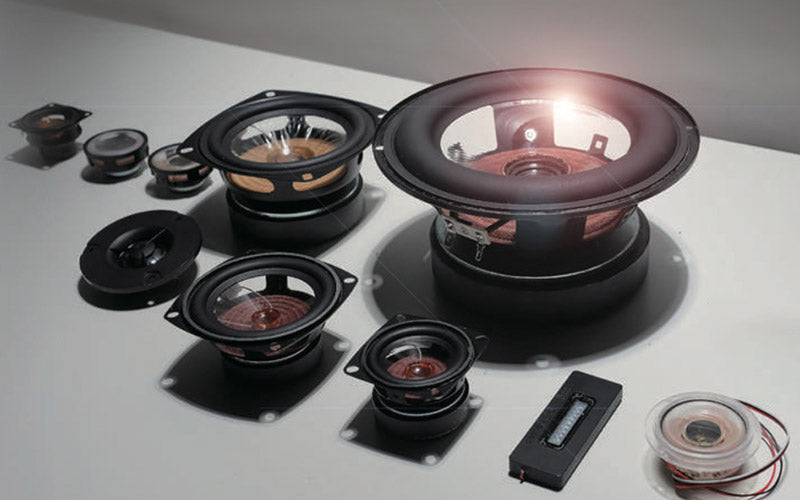
Our diaphragms are manufactured by GAIT, a precision glass company with three decades of expertise in ultra-thin glass applications. The same technology inside luxury automotive displays and high-end optical systems - engineered for environments where distortion isn’t acceptable.
Each diaphragm is formed, treated, and finished to tolerances measured in microns. Not because anyone would notice a shortcut - but because glass doesn’t forgive them.

What do you hear?
Faster transient response. A soundstage that opens up instead of compressing. Details you stopped hearing years ago on recordings you thought you knew.
Glass doesn’t flatter the music. It doesn’t need to. When there’s nothing between the signal and the speaker, the music does the work.
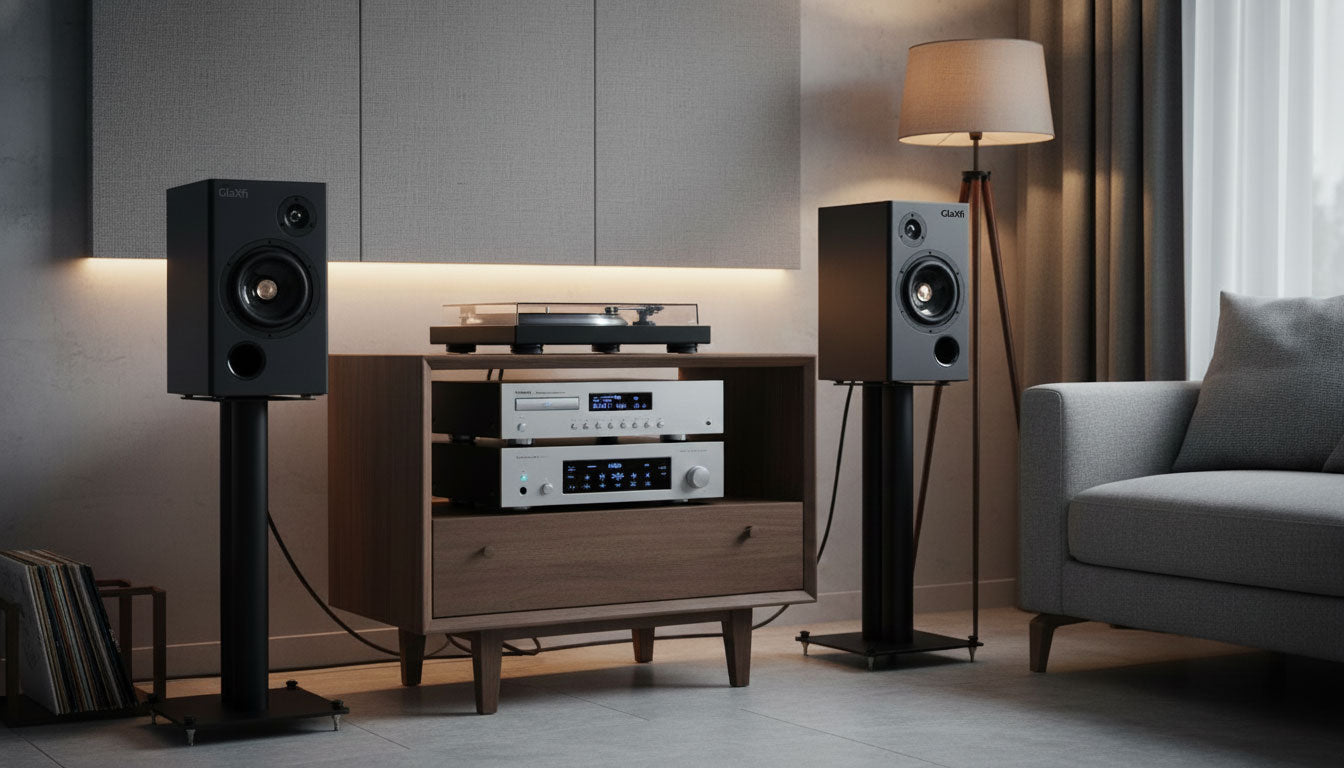
Obsessive attention to detail
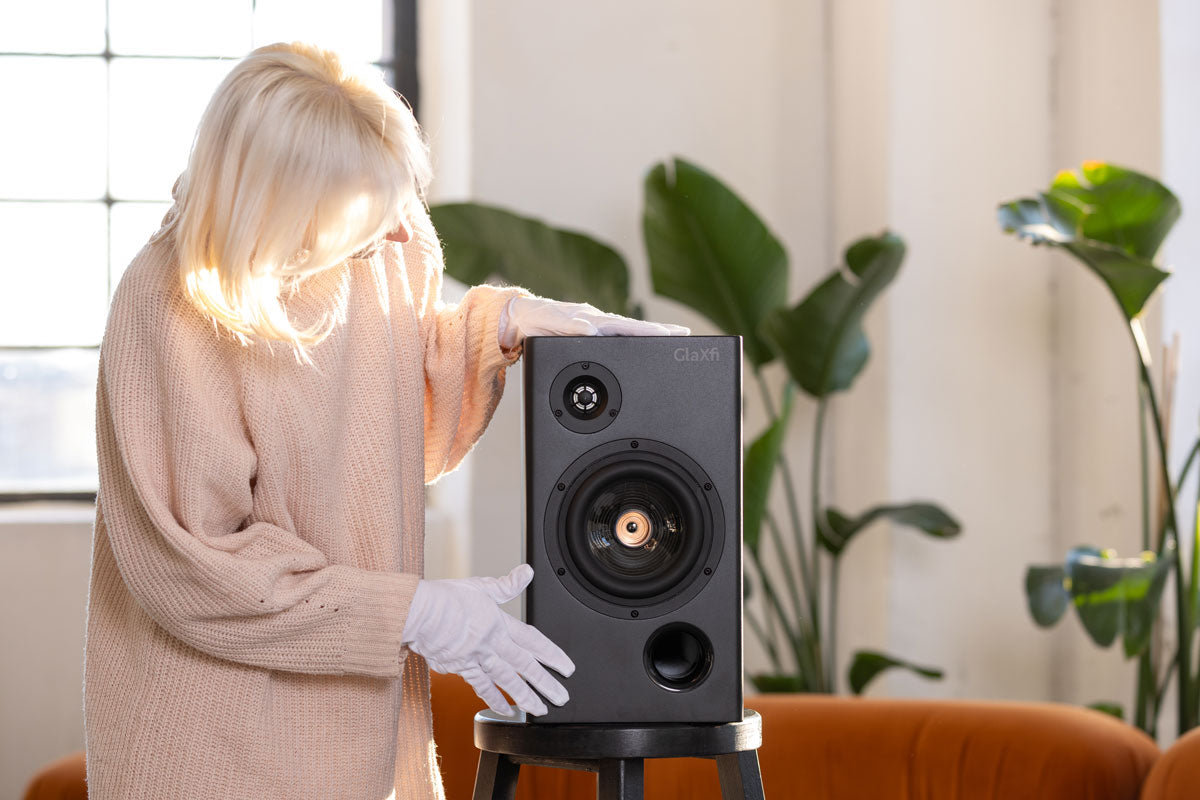
Hands before machines
Every GlaXfi speaker passes through human hands before it earns the name. Not as a formality - as a requirement.
Glass reveals everything. A diaphragm that looks flawless to a scanner might catch light wrong when held at an angle. A cabinet that measures perfectly might resonate in ways only an ear can catch. So we don’t rely on automation alone. Our team inspects, listens, adjusts. They hold components to the light. They tap surfaces and listen for inconsistencies. They reject units that pass every spec but don’t feel right.
It’s slower. It’s inefficient. It’s the only way we know how to work.

The standard is the standard
There’s no “acceptable tolerance” at GlaXfi. No grading system where B-units get sold at discount. Every speaker that ships meets the same standard - the one we’d want in our own home.
This isn’t quality control. It’s a belief: if we wouldn’t listen to it ourselves, we won’t ask you to. The speakers that don’t make it get disassembled and studied - not to assign blame, but to learn.
Every flaw is a teacher.
The result is a rejection rate that would make an accountant nervous. We’re fine with that.

Immersive portable stereo

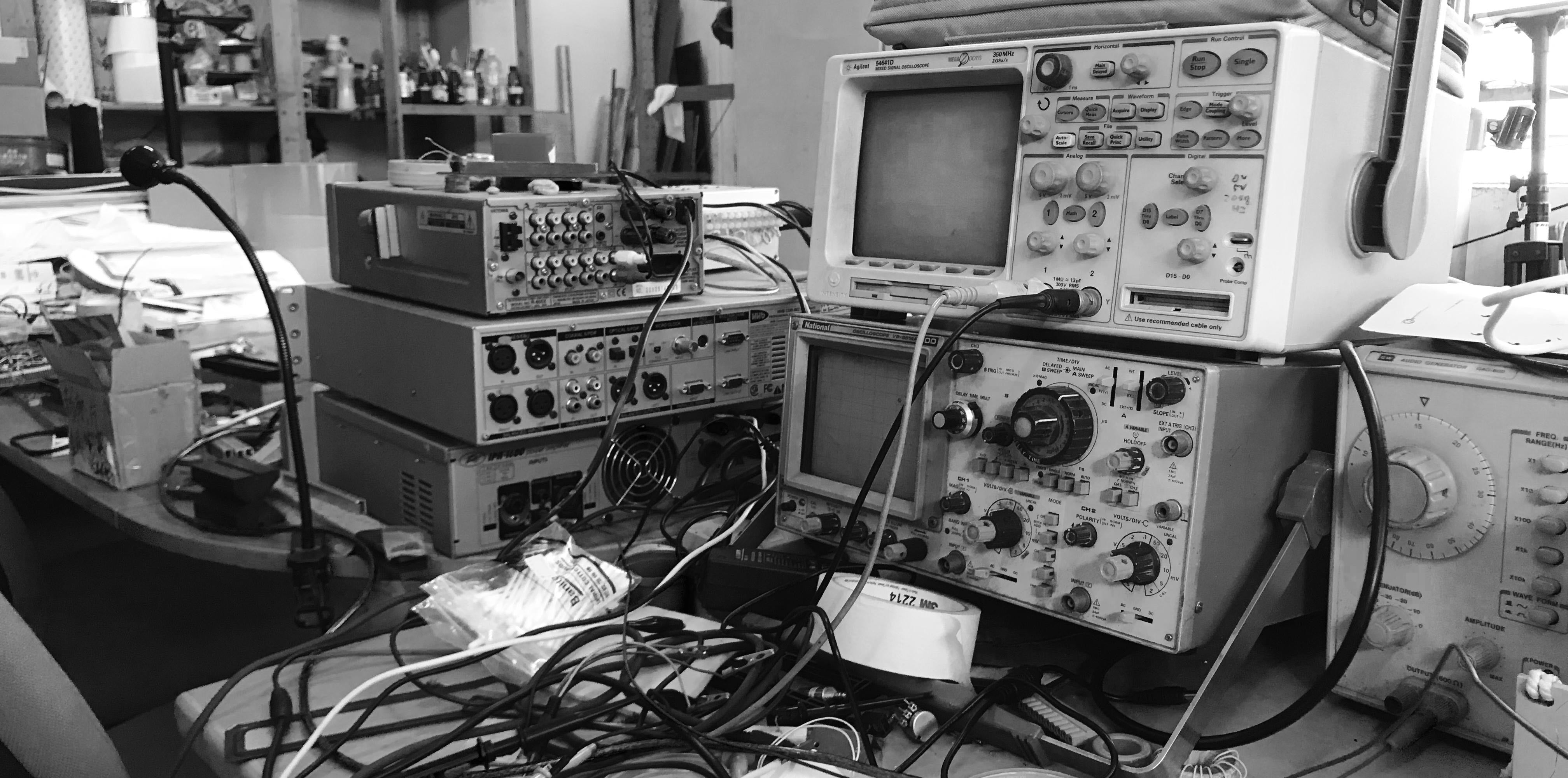

A decade ago, in a small Hong Kong workshop, a question took hold: what if glass could sing?
It wasn't a business plan. It was a fixation. A materials engineer who had spent years perfecting ultra-thin glass for displays and optics became obsessed with a different problem: sound. He knew glass could transmit light without distortion. He wondered if it could do the same for music.
The early experiments were failures. Glass shattered. Prototypes cracked under frequencies they should have handled. The physics said it was possible; the execution said otherwise. Most people would have stopped.
He didn't.
Years of refinement followed. The workshop outgrew Hong Kong, moved to Taiwan, expanded into manufacturing partnerships across Asia. The failures became lessons; the lessons became breakthroughs. What started as one man's obsession became a company—but the question never changed.
Only the answers got better.
Behind The Glass.

GAIT
The glass in a GlaXfi speaker doesn't come from an audio company. It comes from GAIT - a precision glass manufacturer whose technology lives in places where failure isn't an option.
Luxury automotive dashboards. Medical imaging systems. High-end optical displays. For three decades, GAIT has supplied ultra-thin glass to industries that demand clarity, durability, and zero compromise. Their clients don't ask for "good enough." Neither do we.
When we needed a partner who understood glass at the molecular level—who could deliver diaphragms measured in microns, finished to tolerances that most audio manufacturers have never heard of - there was only one call to make.
We design the speakers. GAIT makes the glass that makes them sing.
